Apple Just Dropped the $299 "HomeView": Is This the Ultimate Smart Display to Beat Google Nest?
For years, Apple’s strategy in the smart home space felt strangely incomplete. While Amazon Echo Shows and Google Nest Hubs dominated kitchen counters and bedside tables across the US, Apple loyalists were stuck with the screen-less HomePod or awkwardly propping up an iPad on a stand. But Apple has finally entered the chat, and they are bringing heavy AI artillery.
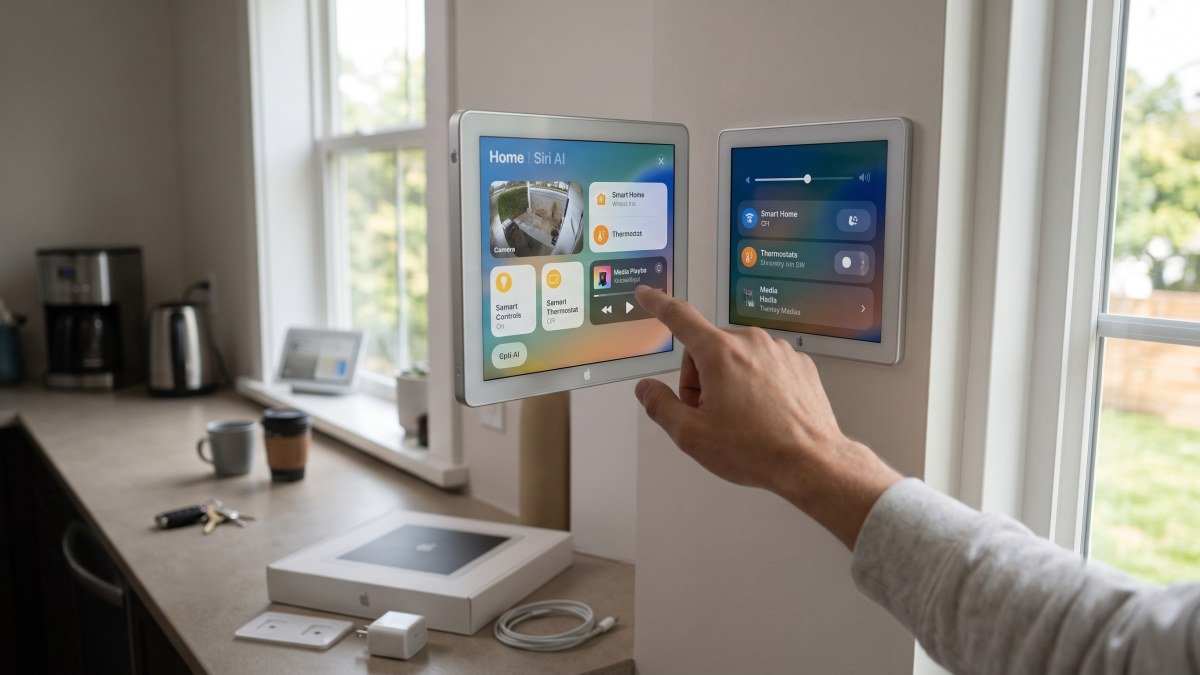
At a media event in New York City, Apple officially announced the HomeView, the company’s first-ever dedicated smart display. Priced aggressively at $299, the HomeView isn't just a digital photo frame; it is a full-fledged smart home command center powered by the brand-new A18 chip and deeply integrated with "Siri AI".
With pre-orders live today and shipping scheduled for November 13, the HomeView represents a massive structural threat to Google Nest and Amazon's smart home dominance. Here is a complete breakdown of Apple's new display, its unique wall-mounting ecosystem, and whether it has what it takes to win the kitchen countertop wars.
The Hardware: A 7-Inch Square Liquid Retina Canvas
True to Apple's design ethos, the HomeView looks distinctly premium. It features a 7-inch, perfectly square Liquid Retina display that seamlessly blends into your home decor.
Apple is offering the HomeView in two distinct physical configurations for the exact same $299 price tag:
- The Countertop Model: This version connects the display to a domed speaker base via a stainless steel hinge, allowing you to smoothly tilt the screen for comfortable viewing. The base houses a surprisingly powerful audio setup: two full-range drivers, a down-firing woofer, and two passive radiators for deep bass.
- The Wall-Mounted Model: For a cleaner look, Apple partnered with Schneider Home to offer three custom wall mounts (including standard AC wired and upcoming PoE options) that turn the HomeView into an embedded digital control panel.
The display itself features incredible ambient lighting technology. Using True Tone, the screen can blast up to 500 nits of brightness in a sunlit kitchen, or drop down to a virtually invisible 0.3 nits—the dimmest screen Apple has ever produced—making it the ultimate non-intrusive nightstand alarm clock.
Powered by Siri AI and the A18 Chip
Where the HomeView separates itself from aging Google Nest devices is sheer processing horsepower. Inside this $299 display beats the heart of a flagship smartphone: the Apple A18 chip.
This massive amount of local processing power is entirely dedicated to running Siri AI, Apple’s next-generation contextual assistant. The HomeView is designed to be deeply personal, utilizing the 12-megapixel Center Stage camera and a four-microphone array to recognize the faces and voices of up to six different household members.
When you walk into the room, the UI dynamically changes. From across the room, the display shows large, simple text like the current temperature or active timers. As the Center Stage camera detects you walking closer, the interface morphs into richer detail, displaying your personalized Home Screen, widgets, and upcoming calendar events.
The Apple Intelligence Catch
While the hardware is undeniably beautiful, there is a distinct ecosystem catch. To unlock the full potential of the HomeView's Siri AI, you must already be deeply entrenched in Apple's modern hardware.
The HomeView relies heavily on personal context drawn directly from your iPhone. For the AI to function seamlessly—such as seamlessly continuing a FaceTime call started on your phone, or pulling up a playlist a friend texted you—you must have an Apple Intelligence-enabled device (an iPhone 15 Pro or newer). If you have an older iPhone, you can still set up the HomeView, but you will lose access to the advanced contextual AI actions.
HomeView vs. Google Nest Hub: The Ultimate Showdown
For years, the Google Nest Hub Max has been the go-to smart display, offering brilliant Google Assistant integration and YouTube integration. However, Apple is attacking Google’s biggest weakness: Privacy.
Apple has built the HomeView using Secure Exclaves within the A18 chip, physically isolating the camera and microphone processing from the rest of the operating system. All facial recognition and voice biometric data remain strictly on the device. Furthermore, Siri AI queries that require cloud computing are sent to Apple's Private Cloud Compute, ensuring your data is never retained or sold.
If you are an Android user, the HomeView is utterly useless to you. But if your family uses iPhones, Apple Watches, and Apple TV, the HomeView is the missing puzzle piece that finally ties the entire HomeKit ecosystem together in a single, physical command center.
With four color options (Silver, Starlight, Rose Pink, and Space Gray) and a shockingly reasonable $299 price tag, Apple is poised to dominate the holiday shopping season. The smart home war isn't just heating up—Apple just dropped a nuclear option.