
Tensor G7 Benchmark Leaks: Does Google's 2nm Pixel 12 Chip Finally Beat Snapdragon?
For the past six generations, Google’s custom Tensor processors have consistently lost the raw speed battle against Qualcomm's Snapdragon and Apple's A-series chips. While Pixel phones deliver industry-leading photography and exclusive AI features, hardcore Android enthusiasts have always levied a valid criticism against Google: the chips run too hot, the modems drain too much battery, and they throttle violently during heavy 3D gaming. But in late 2027, the underlying hardware architecture powering the Google Pixel 12 is undergoing a radical, multi-billion-dollar transformation.
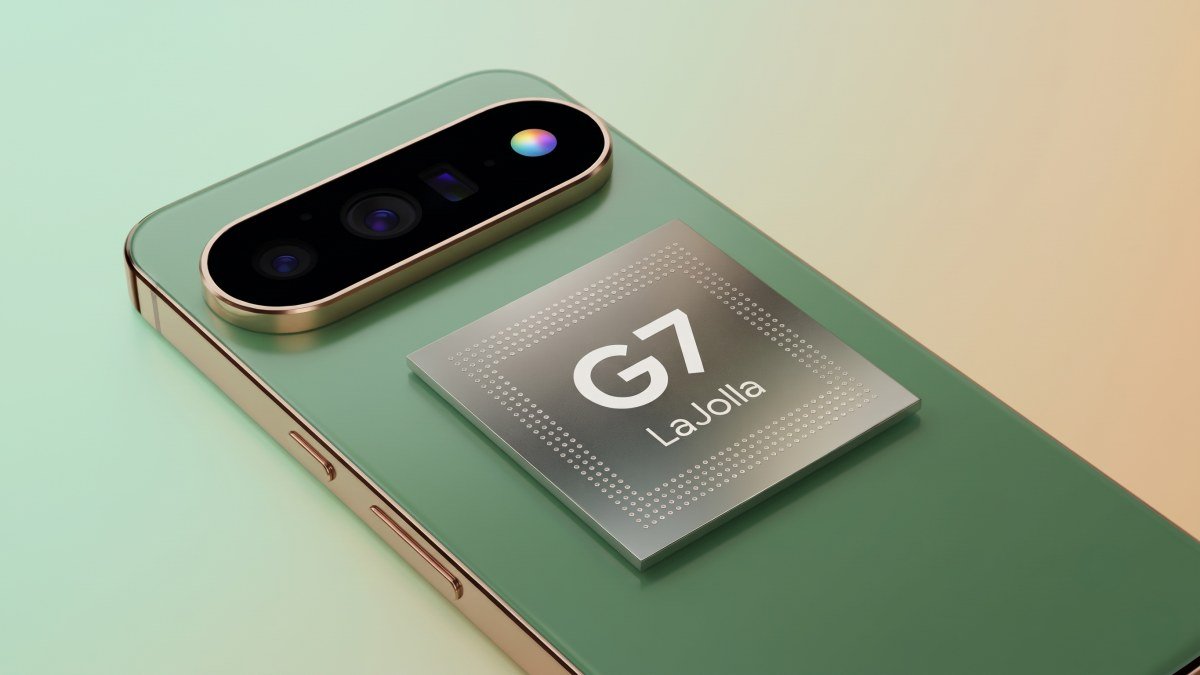
The upcoming Google Tensor G7 (internally codenamed "LaJolla") marks the most significant silicon leap in Google's history. For the first time ever, Google has entirely severed its manufacturing ties with Samsung Foundry. The Tensor G7 is a fully custom design fabricated entirely on TSMC’s bleeding-edge 2nm process—the exact same manufacturing floor building the silicon for the upcoming iPhone 19 Pro.
With highly guarded benchmark scores finally leaking from the supply chain, the Android community is fiercely debating a singular question: Does the Tensor G7 finally possess the raw horsepower to dethrone Qualcomm’s Snapdragon 8 Elite Extreme Gen 6? Here is the definitive breakdown of the leaked Tensor G7 benchmark scores, the thermal reality of the new 2nm node, and what this actually means for everyday Pixel 12 users.
The TSMC 2nm Leap: Escaping the Samsung Shadow
To understand the leaked benchmark scores, you must first understand why Google's previous chips underperformed. Previous Tensor generations were heavily based on Samsung Exynos blueprints and manufactured on Samsung's notoriously inefficient foundries. This led to persistent overheating, which forced the processor to artificially slow itself down to prevent hardware damage.
As we detailed in our comprehensive breakdown of the why the Pixel 12 TSMC 2nm upgrade matters, moving to TSMC changes everything. The 2nm architecture allows Google to pack billions of additional transistors into a smaller physical footprint. The result is a chip that requires significantly less voltage to achieve high clock speeds, drastically reducing ambient heat generation. This shift allows the Tensor G7 to sustain its peak performance for much longer durations, effectively curing the infamous "Pixel gaming stutter."
Leaked Benchmarks: Tensor G7 vs Snapdragon 8 Elite
While synthetic benchmarks do not perfectly replicate real-world usage, they remain the ultimate stress test for raw CPU and GPU capabilities. The latest Geekbench 6 and 3DMark Wild Life Extreme scores leaking from early engineering samples reveal a fascinating paradigm shift in the 2027 mobile market.
Google has completely overhauled the CPU cluster for the Tensor G7. Moving away from the bloated 9-core setup of the past, the G7 utilizes an aggressive 1+3+4 architecture, featuring a massive Cortex-X5 prime core clocked above 3.4GHz, supported by three Cortex-A730 performance cores and four A520 efficiency cores.
| Processor Architecture (2027) | Geekbench 6 (Single-Core) | Geekbench 6 (Multi-Core) | AI Processing Power (NPU) |
|---|---|---|---|
| Google Tensor G7 (LaJolla) | ~2,850 | ~8,900 | Class-Leading (Optimized for Gemini) |
| Snapdragon 8 Elite Extreme Gen 6 | ~3,200 | ~10,400 | Exceptional (General Compute) |
| Apple A21 Pro (iPhone 19 Pro) | ~3,500 | ~10,100 | Highly Integrated (Apple Intelligence) |
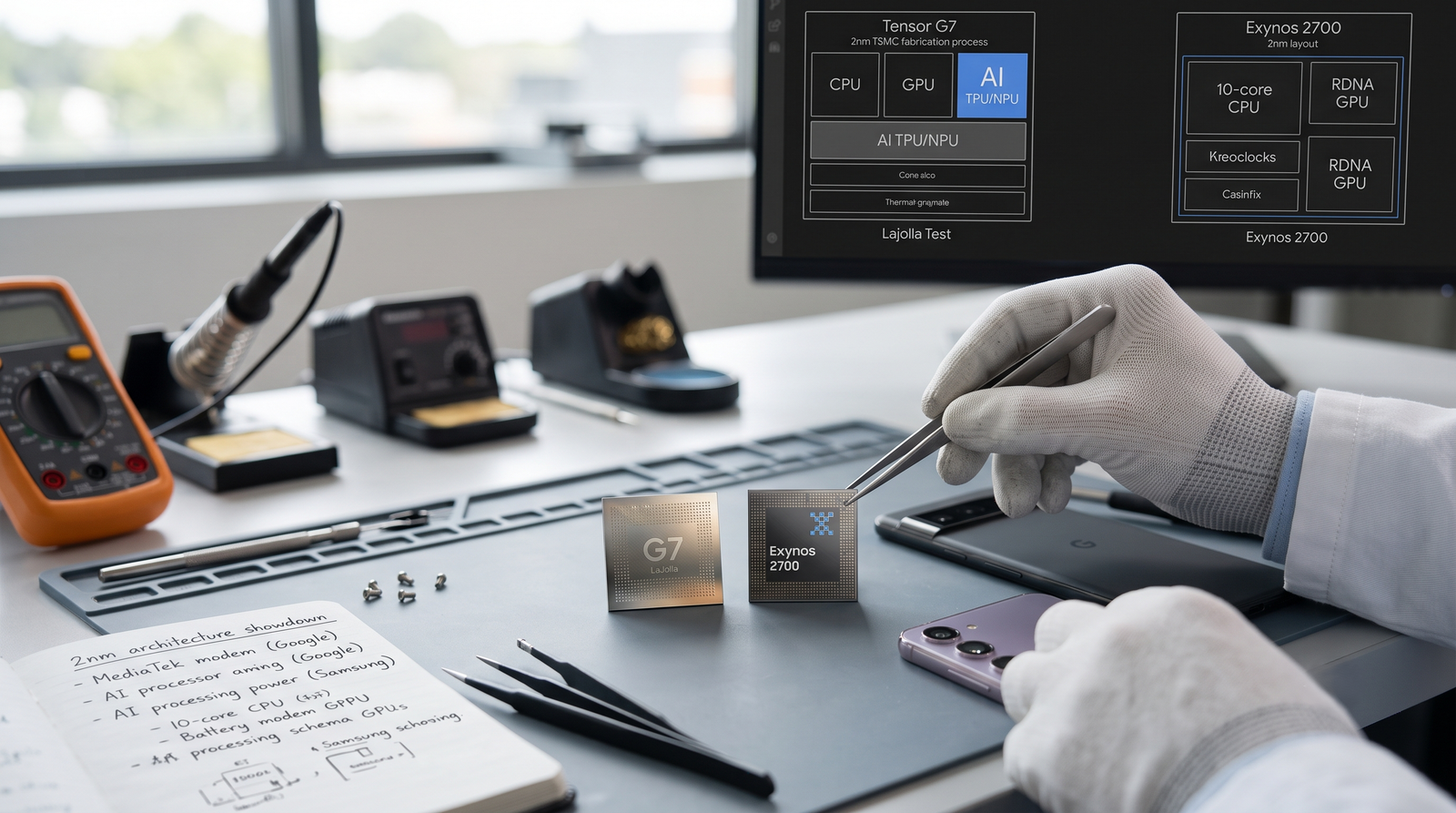
| Samsung Exynos 2700 | ~2,700 | ~8,600 | Standard |
Swipe sideways to see all table columns →
- Geekbench 6 (Single-Core)
- ~2,850
- Geekbench 6 (Multi-Core)
- ~8,900
- AI Processing Power (NPU)
- Class-Leading (Optimized for Gemini)
- Geekbench 6 (Single-Core)
- ~3,200
- Geekbench 6 (Multi-Core)
- ~10,400
- AI Processing Power (NPU)
- Exceptional (General Compute)
- Geekbench 6 (Single-Core)
- ~3,500
- Geekbench 6 (Multi-Core)
- ~10,100
- AI Processing Power (NPU)
- Highly Integrated (Apple Intelligence)
- Geekbench 6 (Single-Core)
- ~2,700
- Geekbench 6 (Multi-Core)
- ~8,600
- AI Processing Power (NPU)
- Standard
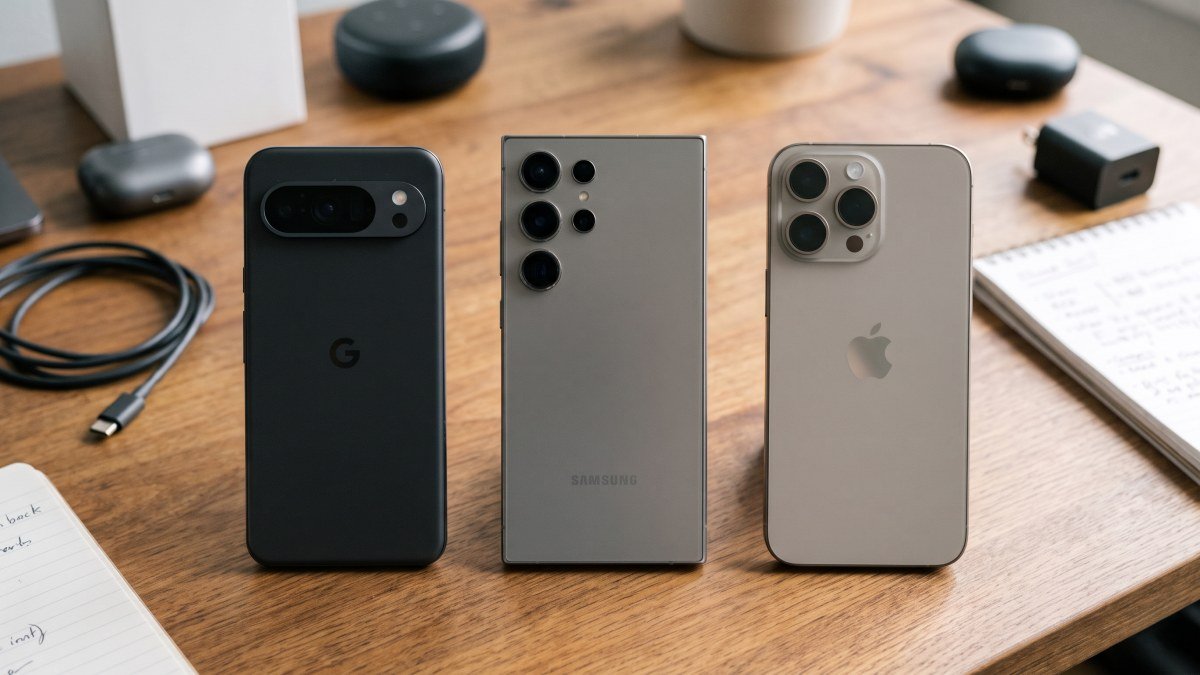
The numbers reveal a harsh truth for absolute spec-chasers: in pure, brute-force CPU speed, the Snapdragon 8 Elite Extreme Gen 6 still holds the multi-core crown in the Android space. However, this is no longer the blowout it was in the Tensor G3 and G4 eras. The Tensor G7 has closed the gap significantly, beating Samsung's Exynos 2700 outright and standing shoulder-to-shoulder with Qualcomm in daily fluidity and app-load responsiveness.
The True Metric: NPU and RAM Dominance
Google's refusal to chase the Snapdragon in synthetic multi-core benchmarking is an intentional strategy. As we unpacked in the Tensor G7 LaJolla architecture deep dive, Google sacrifices peak CPU clock speeds to free up massive physical die space for a monstrous Neural Processing Unit (NPU) and an entirely new Image Signal Processor (ISP).
The modern smartphone battlefield is no longer determined by how fast you can open a web browser; it is defined by Generative AI. The Tensor G7 is custom-designed from the silicon level up to run Android 18 Gemini AI features entirely on-device, with zero cloud latency. While the Snapdragon 8 Elite is a fantastic general-purpose chip, the Tensor G7’s NPU processes complex machine learning tasks—such as real-time video unblurring, on-device audio translation, and massive language model queries—drastically faster and with vastly superior energy efficiency.
Furthermore, to feed this hungry AI engine, Google has completely overhauled the memory pipeline. Supply chain reports confirm the integration of ultra-fast LPDDR6 RAM modules directly adjacent to the SoC. When combined with a highly stable, integrated MediaTek 5G modem (finally ditching the problematic Samsung modems of the past), the Tensor G7 LPDDR6 leaks point to a device that will never reload background apps or drop cellular connections in poor coverage areas.
Does the Tensor G7 Win the Chip War?
If you judge a smartphone processor exclusively by its ability to render maximum frames-per-second in intensive 3D games, the Qualcomm Snapdragon 8 Elite Extreme Gen 6 remains the undisputed king of the Android ecosystem. Qualcomm’s GPU architecture is simply unparalleled for hardcore mobile gamers.
However, if you define smartphone performance by how intelligently the device anticipates your needs, how seamlessly it processes night-time photography, and how flawlessly it runs advanced Gemini AI features without draining your battery, the Tensor G7 is a monumental triumph. By escaping Samsung's foundry and embracing TSMC's 2nm process, Google has finally built a processor that delivers uncompromised thermal stability and elite battery life. The Tensor G7 doesn't just catch up to the industry standard; for the vast majority of real-world users, it actively redefines what a smartphone processor is supposed to do.