
DevDuniya
Aug 12, 2026
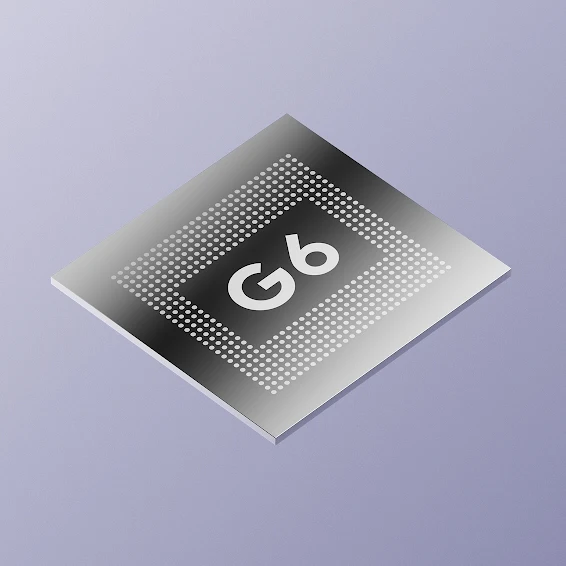
For years, US consumers upgrading to the latest Google Pixel flagship have had to accept a familiar compromise. You get the absolute best camera on the market, incredibly smart AI software, and a clean Android interface—but you had to settle for a processor that ran a little too hot and lagged slightly behind the raw horsepower of its Apple and Snapdragon competitors.
With the launch of the Google Pixel 11 series on August 12, 2026, Google is looking to rewrite that narrative. At the heart of this new lineup is the highly anticipated Google Tensor G6 chip (internally codenamed "Malibu"). Google is promising major performance and efficiency gains. But is the Tensor G6 finally fast enough to satisfy demanding American power users and hardcore mobile gamers?
In this comprehensive, deep-dive review, we are breaking down the leaked benchmarks, the revolutionary 2nm manufacturing process, and the slightly quirky GPU choices Google made to balance costs and performance. Let's dig into the silicon! 💥
The biggest hurdle for previous Tensor generations was thermal management and battery efficiency. If you were recording 4K video on a hot summer day in Texas, older Pixels were notorious for thermal throttling. The Tensor G6 aims to completely eliminate that issue by moving to a brand-new manufacturing node.
The Tensor G6 is officially the very first smartphone chip to be manufactured on TSMC's cutting-edge 2nm process (specifically the N2 node). By skipping the more expensive N2P process, Google was able to keep production costs reasonable while still delivering a massive leap in power efficiency compared to the 3nm Tensor G5.
What does a 2nm chip actually mean for you? It means the microscopic transistors inside the chip are packed closer together than ever before. Electricity has a shorter distance to travel, which means the chip requires less power to run and generates significantly less heat. Google heavily focused on optimizing power usage with the G6, ensuring your phone stays ice-cold and your battery lasts all day, even under heavy loads.
Google has historically taken unique approaches to its CPU core layouts, and the Tensor G6 is no different. The new chip ditches the traditional 8-core setup found on the Tensor G5 in favor of a highly optimized 7-core CPU architecture.
Here is exactly how the 1+4+2 core structure breaks down:
So, how do these specs translate to real-world speed? A Geekbench listing for the top-tier Pixel 11 Pro XL (codenamed "Kodiak") has given us our first look at the Tensor G6's raw horsepower.
The Tensor G6 scored 2,112 points in the single-core test and 5,196 points in the multi-core test.
To put that into perspective, the previous Tensor G5 scored roughly 1,876 points in single-core and 5,102 in multi-core performance. While the multi-core upgrade is modest, the single-core jump is a major upgrade. Single-core performance is what makes opening apps feel instantaneous and keeps the Android interface feeling buttery smooth. With this boost, the Pixel 11 series will easily slice through daily tasks without breaking a sweat.
While the CPU gets a futuristic 2nm upgrade, the graphics processing unit (GPU) inside the Tensor G6 is a bit unconventional. Initially, leaks caused a stir by suggesting Google was using a GPU from 2021.
The reality is slightly more nuanced. The Tensor G6 features an Imagination PowerVR C-Series CXTP-48-1536 GPU. The "P" in CXTP denotes that this is a highly refreshed, power-efficient variant of the older architecture.
Why didn't Google use a top-of-the-line custom GPU? It all comes down to cost control. The Tensor G5 cost Google roughly $65 per unit to manufacture. With the price of LPDDR5X memory expected to average nearly $20 per gigabyte in Q2 2026, Google had to find a way to offset rising component costs. By utilizing a highly optimized, refreshed PowerVR GPU, Google ensures the chip remains incredibly power-efficient without passing massive price hikes onto US consumers. You will still be able to play demanding mobile games effortlessly, but the focus here is clearly on sustained efficiency rather than raw, benchmark-topping graphics performance.
Google’s bread and butter is Artificial Intelligence. The Tensor G6 is designed to run the Gemini AI model locally on your device, entirely offline. To achieve this, Google engineered a brand-new Dual-TPU design codenamed "Santafe".
Instead of a single AI processor, the Tensor G6 splits the workload:
Paired with up to 16GB of ultra-fast LPDDR5X RAM on the Pro models and rapid UFS 4.1 storage, the Pixel 11 has the memory bandwidth required to run desktop-class AI models directly in your pocket.
Fast processing means nothing if your cellular connection drops. American users traveling across vast rural highways or working in dense city skyscrapers rely heavily on robust network connectivity.
To address the network complaints of past generations, the Tensor G6 completely drops older modems in favor of the MediaTek M90 modem. This upgraded modem promises significant improvements in network connectivity and 5G reliability across all major US carriers.
On the photography side, the chip is equipped with a new Image Signal Processor (ISP) codenamed "Metis," alongside a Graphics eXtension Processor (GXP). This combo works in tandem with the dual-TPU to provide hardware-accelerated image handling, meaning advanced computational photography and cinematic video processing happen instantly when you press the shutter. Finally, to ensure all your personal data and biometric information remains locked down, the G6 integrates the next-generation Titan M3 security chip.
The short answer? Yes, absolutely.
If you are a benchmark fanatic who solely cares about getting the highest possible gaming frame rates, competing chips might still edge out the Tensor G6 in raw graphical synthetic tests. However, smartphones are no longer just about raw speed; they are about smart speed.
The move to TSMC's 2nm node is a monumental win for battery life and thermals. The massive upgrade in single-core CPU performance ensures the phone feels lightning fast in daily use. The MediaTek M90 modem fixes historical connectivity woes, and the dual-TPU AI architecture makes the Pixel 11 the smartest device on the market.
By perfectly balancing cost, efficiency, and real-world performance, the Google Tensor G6 finally delivers the uncompromising, premium flagship experience that US consumers have been waiting for.
 DevDuniya
 DevDuniya
 DevDuniya