
DevDuniya
Aug 12, 2026
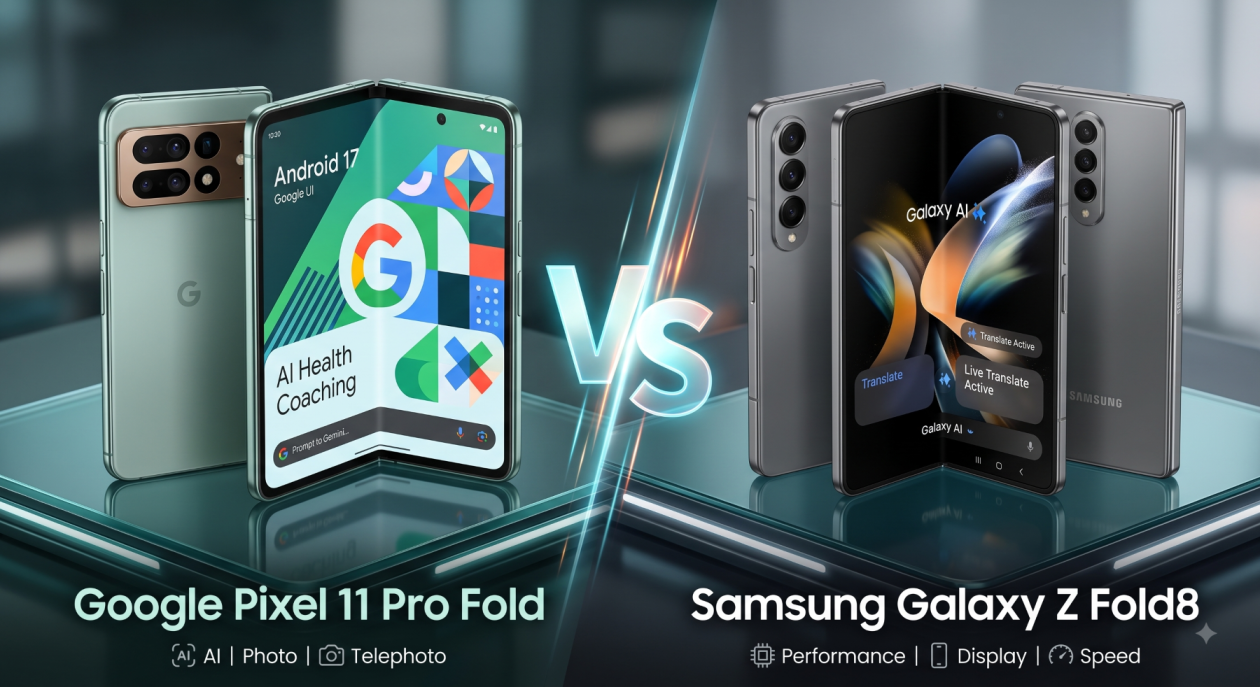
The foldable smartphone war in the United States has reached a historic peak. If you are shopping for an ultra-premium, big-screen device, two flagship titans stand head-and-shoulder above the rest: the Google Pixel 11 Pro Fold and the Samsung Galaxy Z Fold8.
Both of these technological powerhouses command a starting retail price of $1,899.99, but they offer radically different visions for what a luxury foldable should be. Google focuses on heavy computational AI, 16GB of standard RAM, a dedicated 5x optical telephoto lens, and its unique rear "HiLight" notification system. Samsung counters with an impossibly thin and lightweight chassis ("World's Lightest Fold"), the screaming-fast Snapdragon 8 Elite Gen5 processor, dual 50MP cameras, and 45W ultra-fast charging.
Which phone actually deserves your hard-earned cash? In this comprehensive, deep-dive comparison, we break down every specification, design nuance, camera feature, battery rating, and exclusive US carrier deal so you can make the absolute best buying decision. Let's dive in! 💥
Before we compare the real-world experience, let's see how these two foldable flagships stack up side-by-side on paper.
| Feature / Specification | 📱 Google Pixel 11 Pro Fold | 🌌 Samsung Galaxy Z Fold8 |
|---|---|---|
| Starting MSRP (US) | $1,899.99 (256GB / 16GB RAM) | $1,899.99 (256GB / 12GB RAM) |
| Weight | 8.4 oz (238g) | 7.09 oz (201g) (World's Lightest Fold) |
| Thickness (Folded / Unfolded) | 0.4 inches / 0.2 inches | 0.38 inches / 0.18 inches |
| Cover Display | 6.5" Super Actua OLED (19.5:9, Gorilla Glass Victus 2) | 5.5" Dynamic AMOLED 2X (16:10.1, Gorilla Glass Ceramic 3) |
| Main Inner Display | 8.0" Foldable OLED Canvas | 7.6" Dynamic AMOLED 2X (3:4 Aspect Ratio) |
| Processor | Google Tensor G6 + Titan M3 Security | Qualcomm Snapdragon® 8 Elite Gen5 for Galaxy |
| RAM & Storage Options | 16 GB RAM + 256GB | 12 GB RAM + 256GB / 512GB |
| Rear Camera Array | 48MP Wide + 10.5MP Ultrawide + 10.8MP 5x Telephoto (30x Zoom) | 50MP Wide (OIS) + 50MP Ultrawide |
| Front / Cover Selfie Camera | 10 MP Dual PD (f/2.2, 86.9° FOV) | Dual 10 MP (Main & Cover) |
| Video Capabilities | 4K at 60 FPS + Video Boost & Night Sight Video | 8K at 30 FPS / 4K at 60 FPS |
| Battery Capacity & Rating | 4,806 mAh (Up to 31 Hours Usage) | 4,800 mAh (Up to 29 Hours Usage) |
| Wired Fast Charging | 30W USB-C PPS (50% in ~30 mins) | 45W Super Fast Charging |
| Wireless Charging & Sharing | Wireless Charging Supported | Wireless Charging (20W) + Wireless PowerShare |
| Durability & Materials | IP68 Rating, Multi-Alloy Steel & Aerospace Aluminum | Advanced Armor Aluminum & Gorilla Glass Ceramic 3 |
| Operating System | Android 17 (Pure Pixel Experience) | Android 17.0 / One UI 9.0 |
Holding both of these devices in hand reveals two very different engineering philosophies.
Samsung focused relentlessly on weight and thickness for the Z Fold8. Weighing in at a mere 7.09 oz, Samsung officially holds the crown for the world's lightest folding phone. When folded, it measures just 0.38 inches thick (unfolding to an razor-thin 0.18 inches). It fits comfortably into skinny jeans or suit jacket pockets without dragging you down. Crafted with Advanced Armor Aluminum and Gorilla Glass Ceramic 3, the Z Fold8 comes in striking colors like Lavender, Cream, and Graphite.
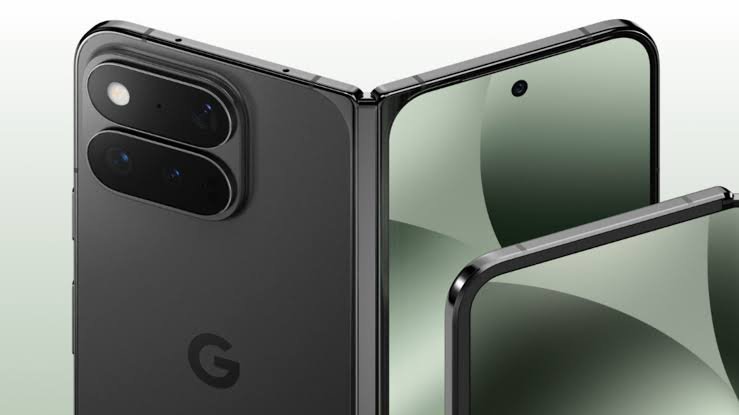
Google went in a different direction, prioritizing extreme structural resilience and AI functionality. The Pixel 11 Pro Fold is about 1mm thinner and almost 10% lighter than its predecessor, weighing 8.4 oz and measuring 0.4 inches folded. It is built with multi-alloy steel and aerospace-grade aluminum, earning an official IP68 water and dust protection rating.
Google also introduced an exclusive hardware feature: Pixel HiLight. When your phone is sitting face-down on a desk, subtle glowing lights on the back camera housing gently alert you when VIP contacts are calling or when you are actively conversing with Gemini AI, keeping you informed without forcing you to stare at a glowing screen.
Both foldables offer gorgeous, high-refresh-rate 120Hz displays, but their dimensions alter how you consume media.
Under the hood, these devices feature two of the most advanced silicon chipsets on the market today.
Samsung equips the Z Fold8 with Qualcomm's top-tier Snapdragon 8 Elite Gen5 for Galaxy processor (featuring two ultra-cores running at a staggering 4.74GHz and six performance cores at 3.6GHz). Paired with 12GB of LPDDR5X RAM, the Z Fold8 is an absolute mobile gaming monster capable of rendering complex 3D titles with zero frame drops. It runs Android 17 with Samsung's feature-rich One UI 9.0, offering deep desktop-like multitasking via Samsung DeX and Knox Security.
Google takes the win in raw memory capacity. The Pixel 11 Pro Fold packs a massive 16 GB of RAM paired with the custom Google Tensor G6 processor and Titan M3 security coprocessor. This extra 4GB of RAM allows the Pixel to keep heavy AI workloads stored locally in memory. Running Android 17, the Pixel offers unparalleled AI features like:
If photography is your primary reason for buying a phone, the camera layout differences here are crucial.
DevDuniya
 DevDuniya
 DevDuniya